





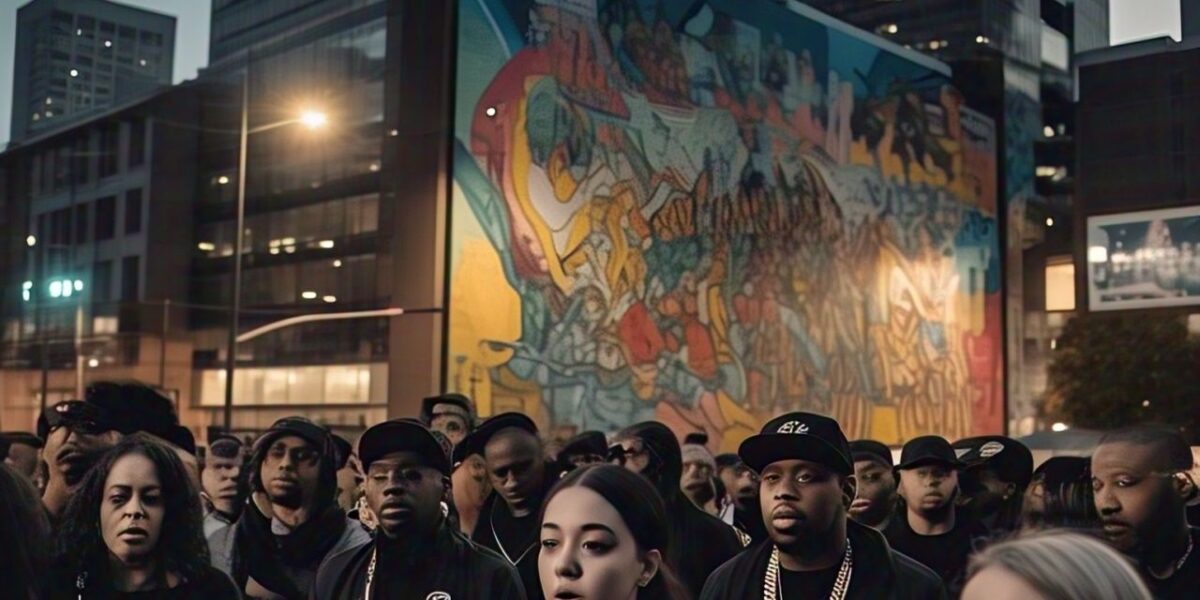

Hip-hop was born in the 1970s Bronx and has evolved into being more than music and entertainment into becoming a global force for social change. From starting as a voice for marginalized communities, hip-hop has become a tool for addressing social injustice. Hip-hop’s impact on social justice movements and its role in shaping the conversation around inequality can’t be overemphasized.
Early Days: Hip-Hop as Social Commentary
Hip-hop pioneers, such as Grandmaster Flash and the Furious Five, used their music to speak out against social ills. Songs like “The Message” (1982) addressed poverty, racism, and police brutality, setting the stage for future generations.
Addressing Systemic Racism.
Hip-hop has consistently confronted systemic racism, from:
- N.W.A’s “Straight Outta Compton” was a powerful critique of police brutality and racial profiling.
- Tupac Shakur’s “Trapped” (1991) remains a reflection of life in impoverished neighborhoods.
- Kendrick Lamar’s “Alright” (2015) was a unified outrage for Black Lives Matter.
Police Brutality.
Hip-hop has played a significant role in highlighting police brutality and advocating for reform:
- . CJole’s “1985” (2018): A critique of systemic racism and police violence.
- Chance the Rapper’s “Angels” (2016) was a call to action against police brutality.
- Jay-Z’s “Spiritual” (2016): A reflection on racial tensions and police violence.
Economic Inequality and Opportunity
Hip-hop addresses economic struggle and promotes empowerment:
- Jay-Z’s “Dirt Off Your Shoulder” (2003): A rags-to-riches story of overcoming adversity.
- Kanye West’s “Jesus Walks” (2004): A commentary on economic struggle and redemption.
- Nicki Minaj’s “Chun-Li” (2018): A celebration of female empowerment and financial independence.
Women’s Rights and Feminism
Hip-hop has become a platform for feminist voices:
- Lauryn Hill’s “Doo Wop (That Thing)” (1998) critiqued the patriarchy and its female objectification.
- Missy Elliott’s “Get Ur Freak On” (2001): A celebration of female empowerment and autonomy.
- Cardi B’s “Bodak Yellow” (2017): A declaration of women’s independence and self-worth.
LGBTQ+ Rights and Representation
Hip-hop has increasingly included LGBTQ+ voices:
- Frank Ocean’s “Thinkin’ Bout You” (2012): A groundbreaking exploration of same-sex love.
- Macklemore & Ryan Lewis “Same Love” (2012): A powerful advocacy for marriage equality between all individuals regardless of sexuality.
- iLoveMakonnen’s “Tuesday” (2014): An openly gay artist’s rise to mainstream success.
Honorable mention includes “ Lesley” by Dave which highlights intimate partner abuse.
Through powerful lyrics and beautiful storytelling, hip-hop artists have:
- Amplified marginalized voices.
- Confronted systemic racism and inequality.
- Promoted empowerment and self-expression
- Shaped conversation around social justice.
As hip-hop continues to evolve, its role in the systemic opposition of social injustice becomes even more vital.
Were you aware of the impact hip-hop has on social injustice?
Has any artist or song inspired you to take action?
Join the conversation!

Other Articles

